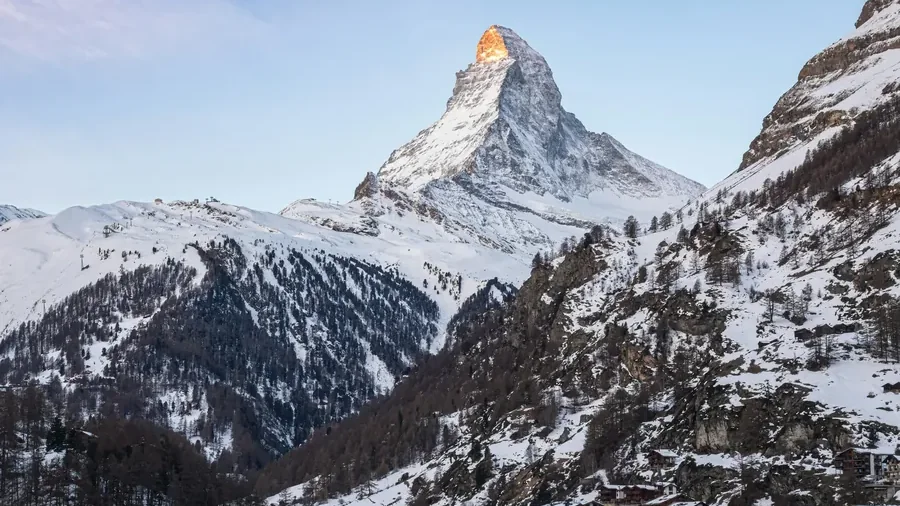
The short answer: Zermatt is a car-free Swiss village at the foot of the Matterhorn, reached by train from Zürich or Geneva, with skiing on several mountains and a lift that carries you over the border into Italy. I spent six days there and would go back tomorrow. Plan the train, the hotel and the key lunch reservations together, and book rentals, instructors and guides before you arrive, especially from December to March.
Why Zermatt asks more of you than other ski towns
Zermatt is quiet luxury with real adventure underneath it: clean mountain air, a village without cars, and some of the most dramatic skiing in the Alps. It is also a place where small details decide how the week goes.
- There are no cars. You arrive by train and finish the journey in an electric taxi. With luggage and ski gear, that taxi needs to be booked before you get there.
- The best day depends on the weather. The crossing to Italy runs over a glacier, and high wind can close it.
- The famous tables fill fast. Chez Vrony and the igloo restaurant on Gornergrat are the lunches people plan the trip around, and both need reservations.
- Peak season books out. From December through March, the good instructors, private guides and rental fittings go early.
None of it is difficult. It just has to be done in the right order, and before you land.
Where to stay, and who each hotel is for
Four hotels I'd send clients to. Perks below come through my Fora preferred-partner access and are confirmed for your dates before anything is booked. The rate is the same as booking direct.
| Hotel | Best for | Included |
|---|---|---|
| CERVO Mountain Resort | Skiers who want to click into their skis at the door and come back to après on their own terrace. Ski-in/ski-out, modern, with real Swiss character. | $100 food and beverage credit, daily breakfast, upgrade and early check-in or late checkout when available |
| Grand Hotel Zermatterhof | Travelers who love a grand, classic hotel. Fondue at saycheese! and the piano at Stars Bar are under the same roof. | $100 food and beverage credit, daily breakfast, upgrade and early check-in or late checkout when available |
| Riffelalp Resort 2222m | Couples who want to wake up on the mountain, with the Matterhorn outside and a serious spa downstairs. | $100 food and beverage credit, daily breakfast, upgrade and early check-in or late checkout when available |
| Schweizerhof Zermatt | Travelers who want contemporary rooms in the best-connected spot in town, right across from the main train station and the train up to the slopes. | $50 food and beverage or spa credit, daily breakfast, upgrade and early check-in or late checkout when available |
Six days, the way I skied it
Day 1Arrive by train
Fly into Zürich and let the train take it from there; Geneva works just as well. The ride climbs past lakes, mountains and alpine meadows, and it is the best introduction Zermatt could ask for. Cars stop before the village, so electric taxis wait at the station. Have one booked if you're carrying bags, and with ski gear, you will be.
Late lunch at Le Petit Royal, where the hot chocolate comes thick and dark under a cap of whipped cream. Rentals are easy to sort in the shops just off the main street. Dinner is fondue at saycheese! inside the Grand Hotel Zermatterhof, then upstairs to Stars Bar for a Negroni while the pianist plays.
Day 2First runs on Sunnegga-Rothorn
Start on Sunnegga-Rothorn. Gentle blues, wide reds that hold the sun, and the Matterhorn in view nearly the whole way. It is the right place to find your legs.
Lunch is at Chez Vrony: family-run, beautifully done, with a terrace view that barely seems real. Order the veal burger it's known for and a glass of wine. Reserve well ahead; it fills quickly. Après starts at the Champagne Bar, with music, bubbles and deck chairs set in the snow, then it's a short walk to CERVO's terrace for a signature cocktail by the firepits.
Day 3Ski to Italy
The Matterhorn Glacier Paradise lift, the highest cable car in Europe, takes you up and over the border to Cervinia. You'll need the Zermatt International ski pass, which covers the Italian side. Wind can shut the crossing, so check the forecast the night before. The Italian side is easier-going, with long cruising runs and food that is better than it needs to be. Lunch at Baita Cretaz is wood-fired pizza and an Aperol spritz. Head back with time to spare before the lifts close.
That evening, dress up. After Seven is Michelin-starred, and the tasting menu is creative and genuinely fun. Afterward, the elevator takes you down to Vernissage for low light and live music.
Day 4Spa and sweets
Give your legs a day at Riffelalp Resort, high above town. The outdoor pool sits in the snow with steam rising off it, and there is herbal tea between rounds of sauna. Book the alpine botanicals massage. It is one of the most relaxing treatments I've had anywhere.
Back in the village, stop at Fuchs Bakery for truffles and handmade chocolates. The chocolate Matterhorns are the gift to bring home. Dinner at Grill Le Cervin, where traditional Swiss dishes arrive with a hot stone and you cook at the table.
Day 5Gornergrat
The cogwheel train climbs slowly out of town to the Gornergrat side, and the slowness is the point. From the top you can count 29 peaks above 4,000 meters. Ski, then lunch at Iglu-Dorf, a restaurant built from snow halfway up the mountain. Reserve ahead. Return your rentals after the last run.
Dinner at Marmo is modern and relaxed, and Thursday is schnitzel night. Ask them to hold sleds for you, then ride them back down into town.
Day 6The slow way home
Coffee and a last walk through the village. The train to Geneva is smooth, punctual and beautiful the entire way; book it in advance and it costs less. I'll be back.
What I take care of
- The connection. Train from Zürich or Geneva and an electric taxi waiting at the station for you and your gear.
- The room. The right hotel for how you ski, with the preferred-partner perks attached.
- The reservations that matter. Chez Vrony, Iglu-Dorf, After Seven, and the sleds at Marmo, booked before you land.
- The mountain. Rentals, instructors and private guides arranged ahead of the December to March rush. A good private guide opens up runs you'd never find and lunch tables you'd never get.
- The Italy day. The International ski pass that covers Cervinia, and a plan built around the forecast, with a backup if the wind closes the crossing.
Is Zermatt right for you?
Zermatt suits skiers who want variety in one trip: easy warm-up runs on Sunnegga, the glacier, Gornergrat and a day in Italy. It suits travelers who care as much about lunch, the spa and the room as about vertical meters. And it suits anyone who likes the idea of a week in a village with no cars at all.
Frequently asked
How do you get to Zermatt?
By train from Zürich or Geneva. Zermatt is car-free, so electric taxis take you from the station to your hotel; book one ahead if you have luggage.
Can you ski from Zermatt to Italy?
Yes. The Matterhorn Glacier Paradise lift connects to Cervinia. You need the Zermatt International ski pass, which covers the Italian side. High wind can close the crossing, so check the forecast the night before and return before the lifts close.
Where should you stay in Zermatt for a ski trip?
CERVO Mountain Resort if you want ski-in/ski-out, the Grand Hotel Zermatterhof for classic grandeur, Riffelalp Resort 2222m for mountain views and a spa, and Schweizerhof for contemporary rooms across from the main train station.
Do you need a reservation at Chez Vrony?
Yes. It fills quickly, as does the Iglu-Dorf igloo restaurant on Gornergrat.
When should you book ski rentals and instructors in Zermatt?
Before you arrive, especially for December through March.